 NovaVibe Pest Control ServiceNovaVibe Pest Control Service
Find the entry. Seal it. Stay gone.
We handle pest control in Franklin, TN for houses, crawlspaces, and small commercial kitchens from Westhaven and Fieldstone Farms to Cool Springs and the Hincheyville Historic District. Most calls start the same way — ants streaming along a baseboard, mouse droppings behind the pantry cans, or winged termites on a windowsill after a warm rain. If you searched for an exterminator near me at 10pm before company arrives, call (629) 654-4442 or text a photo of the bug and where you found it, and we'll tell you what it is before we quote anything.
Call (629) 654-4442
Text or call about your pest control service job — a quick photo helps us quote fast.
A firm, all-in price confirmed before we start — no surprises.
On time, done to standard, and tidy when we leave.
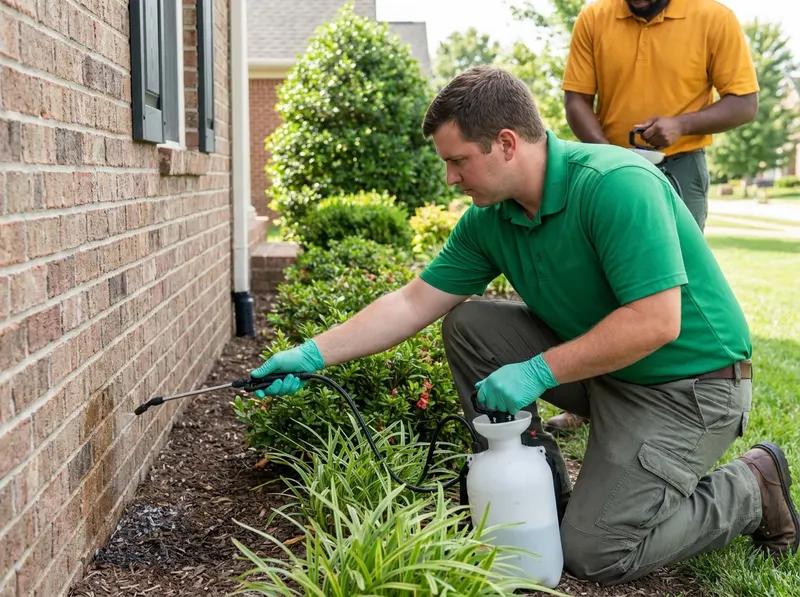
Our quarterly program treats the exterior perimeter, foundation line, weep holes, eaves, and entry points four times a year, with interior work only where activity shows. Quarterly timing matters in Franklin because ant and spider pressure climbs in April and May, wasps peak from August into October, and mice push in with the first cold snaps of late October. Each visit ends with a note on what changed since the last one — new mud tubes, a fresh rub mark, a gap that opened at a garage sweep. If you don't want an annual agreement, say so on the phone and we'll price the same visit as a one-time treatment instead.
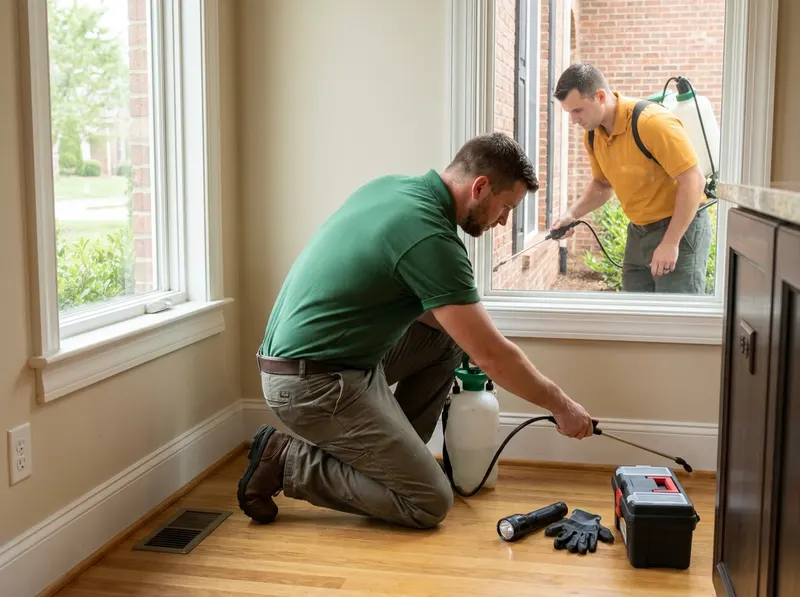
A single visit is the right call when there's a clear trigger — you got back from a trip, a neighbor's remodel pushed activity your way, or guests arrive Saturday. We inspect, treat the interior harborage points and the full exterior band, and hand you a written list of what we found and what we'd seal. One-time service runs $250–$395 depending on square footage and how much crawlspace or attic access is involved. We'll tell you honestly at the door whether one visit is realistically enough for what you're dealing with.
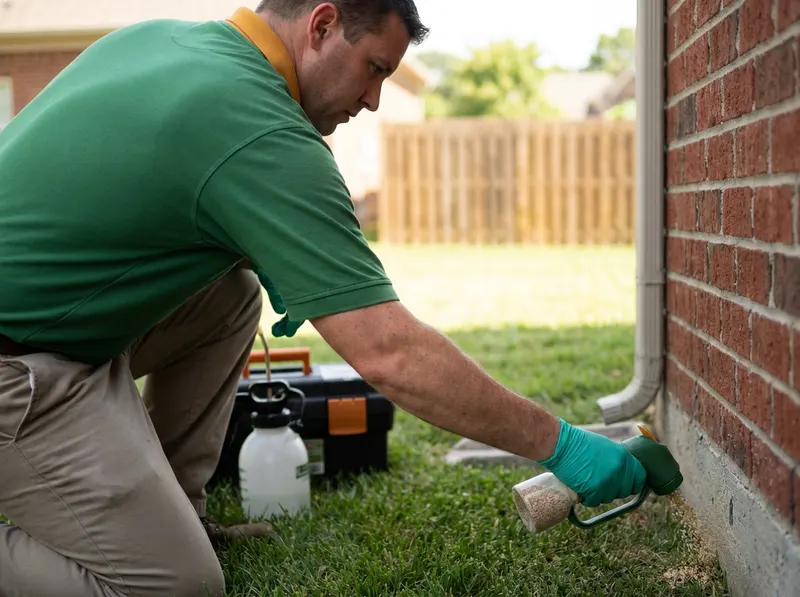
Odorous house ants, pavement ants, and carpenter ants are the three we see most in Franklin, and each one gets a different approach — baiting a trail is right for one and wrong for another. We follow the trail back to the entry point instead of wiping it out at the baseboard, which is why sprayed trails reappear a few feet down the wall a week later. Mulch beds packed against foundations and irrigation heads spraying siding are the two conditions we flag most on tight-lot streets in Westhaven and Ladd Park. Carpenter ant work also includes checking for the damp wood they nest in — usually a leaking hose bib, a clogged gutter line, or a porch band board.
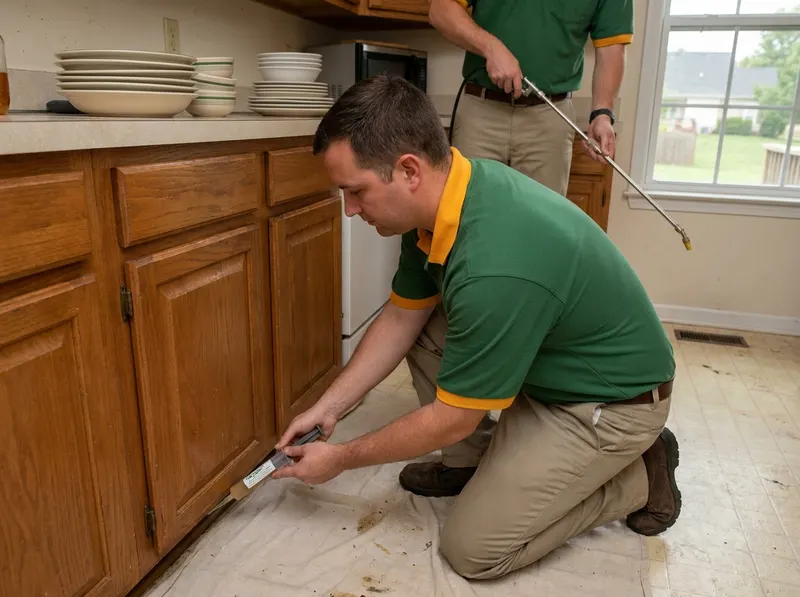
German roaches in a kitchen are a harborage problem, not a spray problem. We pull the dishwasher access panel, check the motor housing, the fridge compressor bay, and hinge voids on upper cabinets, then place gel bait and monitors in those voids and come back to verify the count is dropping. Multi-visit clean-outs run $350–$900 because a single application never clears an established population, and we'd rather tell you that up front than sell you one visit. American roaches — the big ones coming up from a crawlspace or a floor drain — are a different job, and usually trace back to a moisture path we can point at.
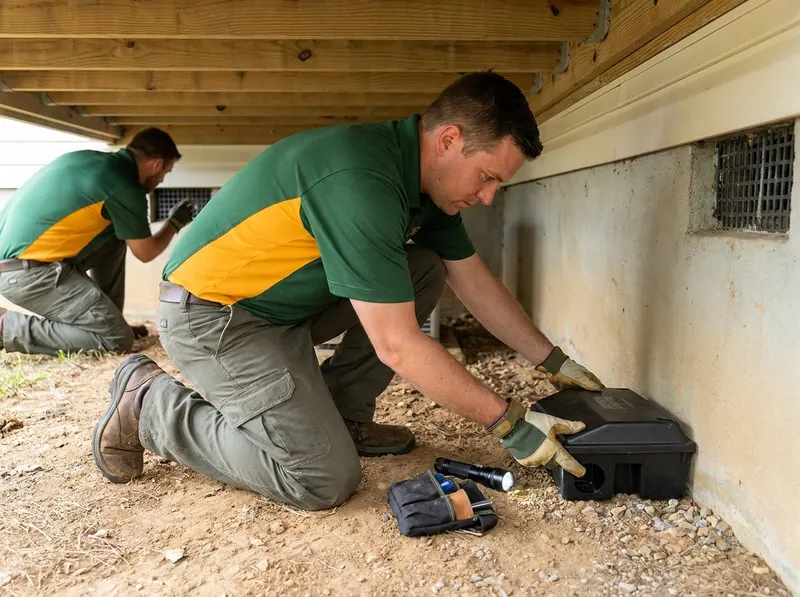
Rodent trapping starts with finding the runways — droppings along joists, rub marks on crawlspace ductwork, chewed insulation near a garage wall. We set and service traps, remove what we catch, and bag it out rather than leaving anything in the attic or crawlspace. Late October through December is the heaviest stretch for rodent calls in Franklin, and scheduling in October is noticeably easier than scheduling in November. Trapping runs $250–$650 depending on how many service trips the population needs before the traps go quiet.
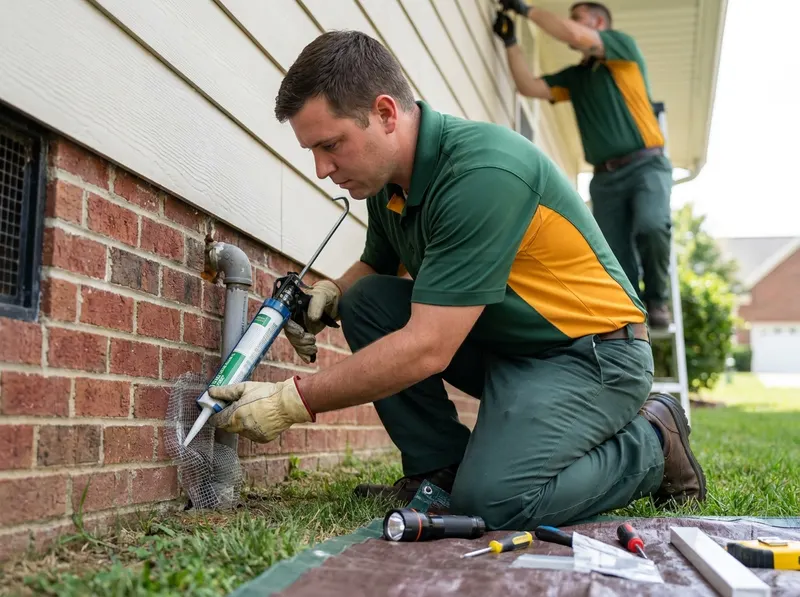
Exclusion is the part most companies skip, and it's the part that ends the problem. We map every opening a mouse can use — garage door corners and worn sweeps, crawlspace vents and access doors, dryer and bath fan terminations, dishwasher and gas line penetrations, weep holes without guards, gaps behind siding at the sill plate — then seal them with hardware cloth, sheet metal, and mortar where mortar belongs. Franklin's 1990s and early-2000s subdivisions like Fieldstone Farms and McKay's Mill share a predictable set of these gaps, and we'll walk you to each one with a flashlight before we quote. Exclusion runs $450–$1,900 based on the number of openings and how hard they are to reach.
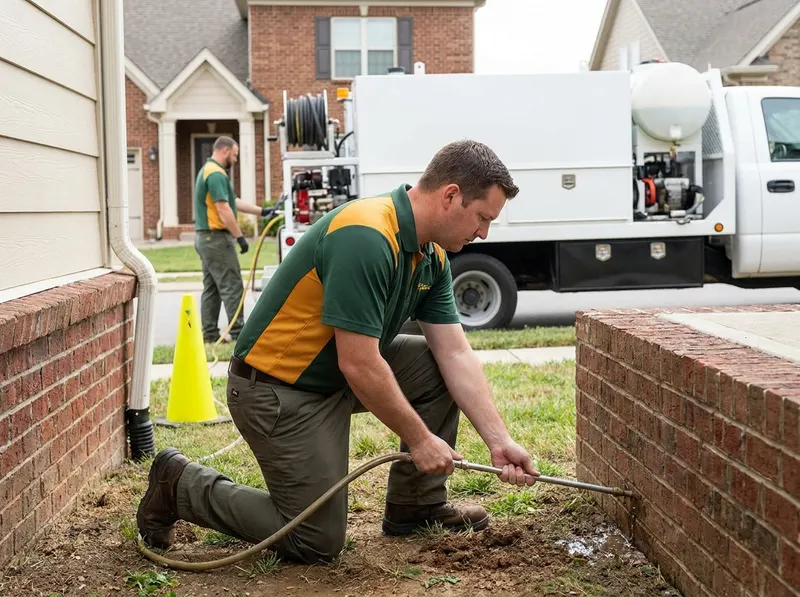
A liquid perimeter treatment creates a continuous treated zone in the soil around the foundation, and it's the approach that fits most Franklin homes with full crawlspaces and heavy clay holding water against the block. The work involves trenching the exterior perimeter, treating around piers and interior foundation walls where access allows, and drilling only where slab or hardscape blocks the trench. Expect $1,400–$3,800 depending on linear footage and how much concrete has to be drilled. We'll show you the mud tubes, damaged wood, or shed wings we found before quoting a dollar figure.
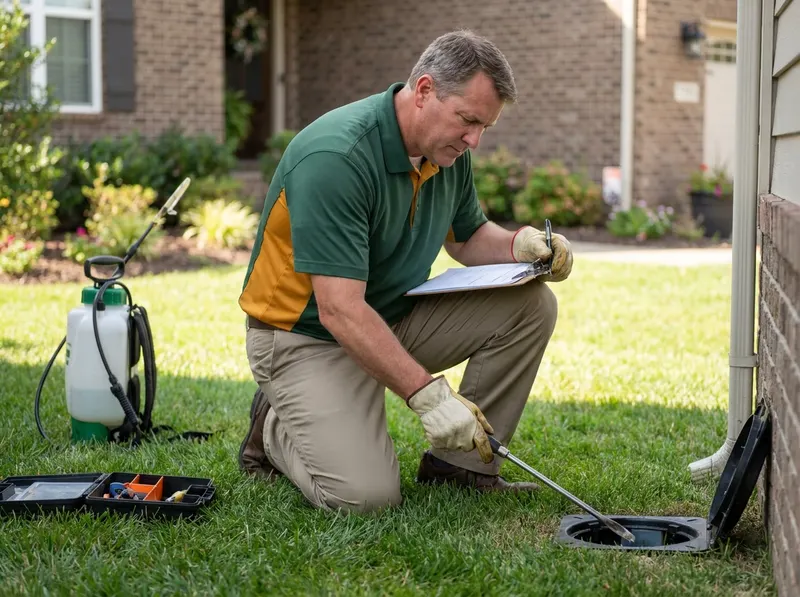
Bait stations sit in the soil around the structure and get checked on a schedule, which suits homes where finished porches, stamped patios, or landscape walls make trenching and drilling messy or expensive. Install plus first-year monitoring generally runs $1,200–$2,400, and monitoring continues on an annual basis with a written record of every station check. Stations also give you an early read on pressure in the yard, which matters on wooded lots near the northern terminus of the Natchez Trace Parkway where subterranean activity is steady. The trade-off compared to a liquid barrier is ongoing renewal cost in exchange for no drilling and documented monitoring.
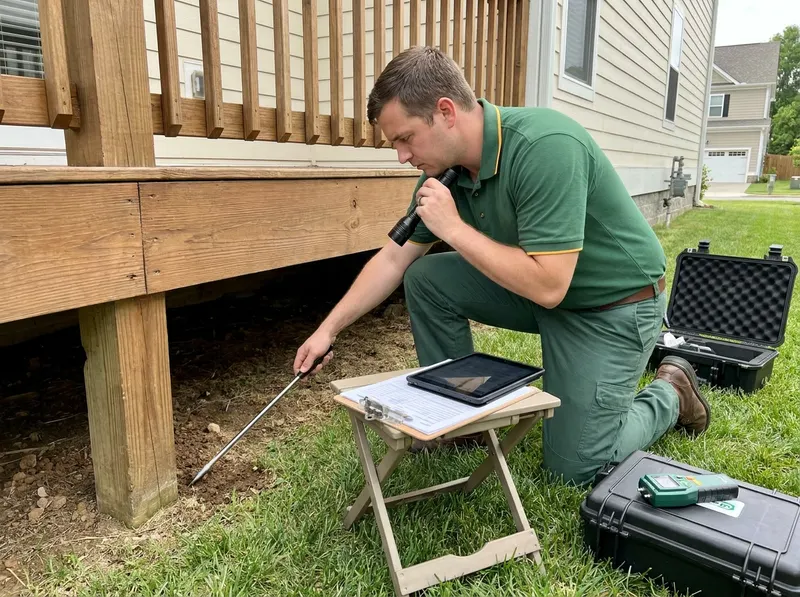
A termite inspection with a written report is what closings, refinances, and cautious buyers ask for, and it's also worth doing on your own house every couple of years. We inspect accessible crawlspace framing, sill plates, piers, garage slab edges, door frames, and exterior siding contact points, then document findings and conditions conducive to termites — grade too high against brick, wood-to-soil contact, standing crawlspace moisture. Reports run $250–$450 depending on size and crawlspace accessibility. Real estate requests cluster from April through July in Cool Springs and Westhaven, so give scheduling a few extra days in that window.
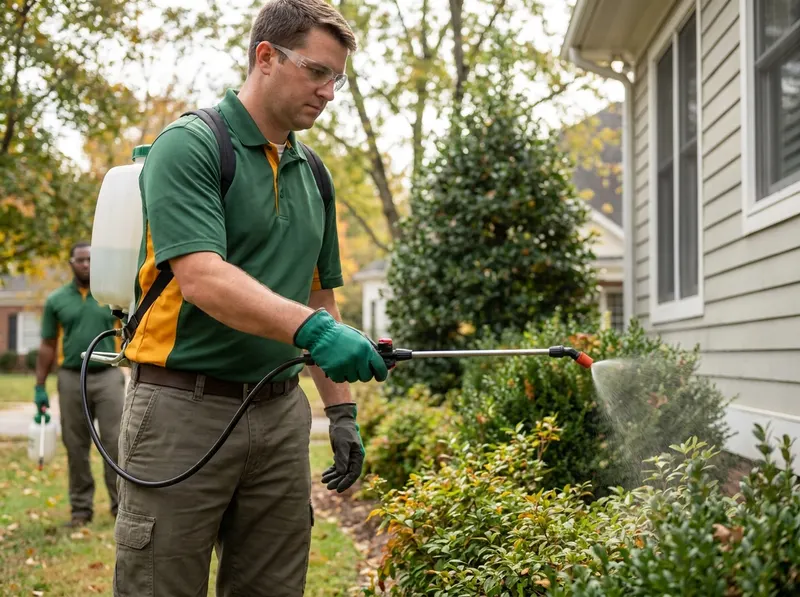
Mosquito service treats the shaded resting spots adults sit in during the day — under deck joists, in dense shrub lines, along fence bases, beneath low tree canopy — and addresses standing water we can reach, like clogged gutters, tarp folds, and neglected saucers. Programs run roughly May through September, and most Franklin homeowners start in April so the first barrier is down before Memorial Day cookouts. A season program typically runs $500–$900 depending on lot size and how much canopy and creek-bottom vegetation you have. Yards backing to Pinkerton Park and the Harpeth River greenway carry more pressure than open lots, and we price and schedule those honestly.
Stinging insect calls peak from August into October in Franklin, when colonies are largest and most defensive. We treat and remove nests from soffits, gable vents, shutter backs, playsets, grill covers, and ground burrows, then check the surrounding eave line for the secondary nests people usually miss. Nest removal typically runs $250–$400 depending on height and access. Tell us on the phone if anyone in the household has a sting allergy — that moves the call up our list.
Spider work is mostly about what they're eating and where they're getting in, so we de-web eaves, porch ceilings, window frames, and garage corners, then treat the perimeter band and seal the gaps feeding the interior sightings. The same visit handles the September and early-October wave of stink bugs and boxelder bugs looking for a warm wall to overwinter in, which is the easiest infestation in Franklin to prevent and the hardest to fix once they're inside the wall voids. Interior and exterior spider service runs $250–$375. If you're seeing brown recluse or widow spiders in a crawlspace or garage, say so — that changes where we place monitors.
Kitchens, bakeries, coffee shops, and small offices around Cool Springs Galleria and The Factory at Franklin get scheduled service built around your closed hours and your inspection paperwork. We service the dock and dumpster line, floor drains, dish pit, dry storage shelving, and equipment voids, log what we find each visit, and flag the sanitation and moisture issues driving activity instead of just treating around them. Monthly commercial visits typically run $175–$450 per visit depending on square footage and service frequency. <strong>Documentation is part of the job, not an add-on.</strong>
If you have one specific problem — a yellowjacket nest in a soffit, a single mouse in the garage, a roach sighting after a trip — choose a one-time targeted treatment and let us document what we find. If pests keep coming back four to six weeks after a DIY spray or a previous company's visit, choose the quarterly program, because the return interval is what breaks the breeding cycle; the trade-off is roughly $250–$325 per visit on a schedule versus paying $250–$395 again every time the problem reappears. For termites, if your home has a full crawlspace and slow-draining Williamson County clay against the foundation, a liquid perimeter barrier at $1,400–$3,800 gives you a continuous treated zone; if the structure has finished porches, stamped patios, or hardscape that would need drilling, a bait station system at $1,200–$2,400 for install and first-year monitoring avoids the cutting and gives you a yearly written record instead. The trade-off is upfront cost and disruption versus long-term monitoring you have to keep renewing. For mice, if you want the activity to stop this week, trapping at $250–$650 does that; if you want it to stay stopped, add exclusion at $450–$1,900, because trapping removes the animals and <strong>only sealing removes the reason they came in</strong>. If your issue is mosquitoes on a shaded lot near the Harpeth River greenway, a season-long barrier program at $500–$900 fits better than single treatments, since adult knockdown lasts weeks, not months. And if you are selling a home in Cool Springs, Berry Farms, or Westhaven, order the termite inspection and written report at $250–$450 early — April through July is the busiest stretch for real estate letters and scheduling takes a few extra days.
| Service call | Upfront quote |
Your exact price is confirmed before any work begins.